Below are some of the questions I needed to answer before taking a Sable Island photography trip. I wish I had this information in one place prior to my trip. I hope this helps with your travels. Note that this is current as of the Fall 2025 and the answers may well change according to your tour operator and date of travel.
Where is Sable Island?
Sable Island is an isolated island located at the edge of the Continental Shelf in the Atlantic Ocean, 290 km southeast of Halifax, Nova Scotia.
Visit the Parks Canada website to learn about park services and visitor information.
What do I need to know before visiting?
Visiting Sable Island is a rare experience—remote, protected, and unlike anywhere else in Canada. Here are the essentials to know before you go:
- Access is Limited. You can’t just hop on a ferry—visits are tightly controlled by Parks Canada. Access is usually by charter flight (small planes landing on the beach), helicopter or by expedition cruise. Weather and sea conditions often affect travel plans, so flexibility is key.
- It’s a National Park Reserve. As a protected area, there are strict rules: no collecting souvenirs (shells, bones, plants), and you must follow Leave No Trace principles. You’ll be accompanied by Parks Canada staff who guide visits and protect the fragile ecosystem.
- Wildlife Comes First. Expect to see the famous wild horses and seals, but always from a respectful distance. The dunes and grasses are easily damaged—stick to designated areas.
- Weather is Unpredictable. Sable is foggy, windy, and cool even in summer. Bring layers, waterproof gear, and good walking shoes. There are no trees or shelter on the island.
- No Services. There are no restaurants, shops, or accommodations. Visits are typically day trips; you’ll need to bring your own food, water, and supplies.
- There is limited or no cell service. Expect the Unexpected. Flights can be delayed or canceled due to fog, wind, or shifting sand on the landing strip.
The experience is less about a set itinerary and more about exploring a wild, ever-changing landscape. A trip to Sable Island is about surrendering to nature—remote, untamed, and unforgettable.
Research before your trip:
- Download the Sable Island Visitor Guide and Map
- Read the Guide to Sable Island National Park Reserve
- Understand the Bio security measures
- Watch the Sable Island orientation video on YouTube
- Read the Mi’kma’ki Sable Island Pledge
- Read about the culture and history of Sable Island
Where can I arrange a visit?
Sable Island is accessible by air or by sea. Day-use visitors can visit the island through Parks Canada approved tour operators, air transporters, and chartered vessels, or with written permission from Parks Canada when travelling by private vessel or small-expedition ship.
Here is a list of approved operators:
- Kattuk Expeditions (plane, helicopter)
- Picture Perfect Tours (plane, helicopter)
- Sable Aviation (plane)
- Vision Air Services Inc. (helicopter)
- Sable Ocean Adventures (boat)
Tour operators typically do not include the cost of hotel accommodations, food and airfare to and from Halifax.
I travelled in October 2025 with a private tour arranged by photographer, Michelle Valberg. We used Vision Air Services to travel to and from the island. The flight time to and from the island is about 60 minutes. We had eight hours on the island, roughly 9am until 4pm.
What wildlife can I expect to encounter?
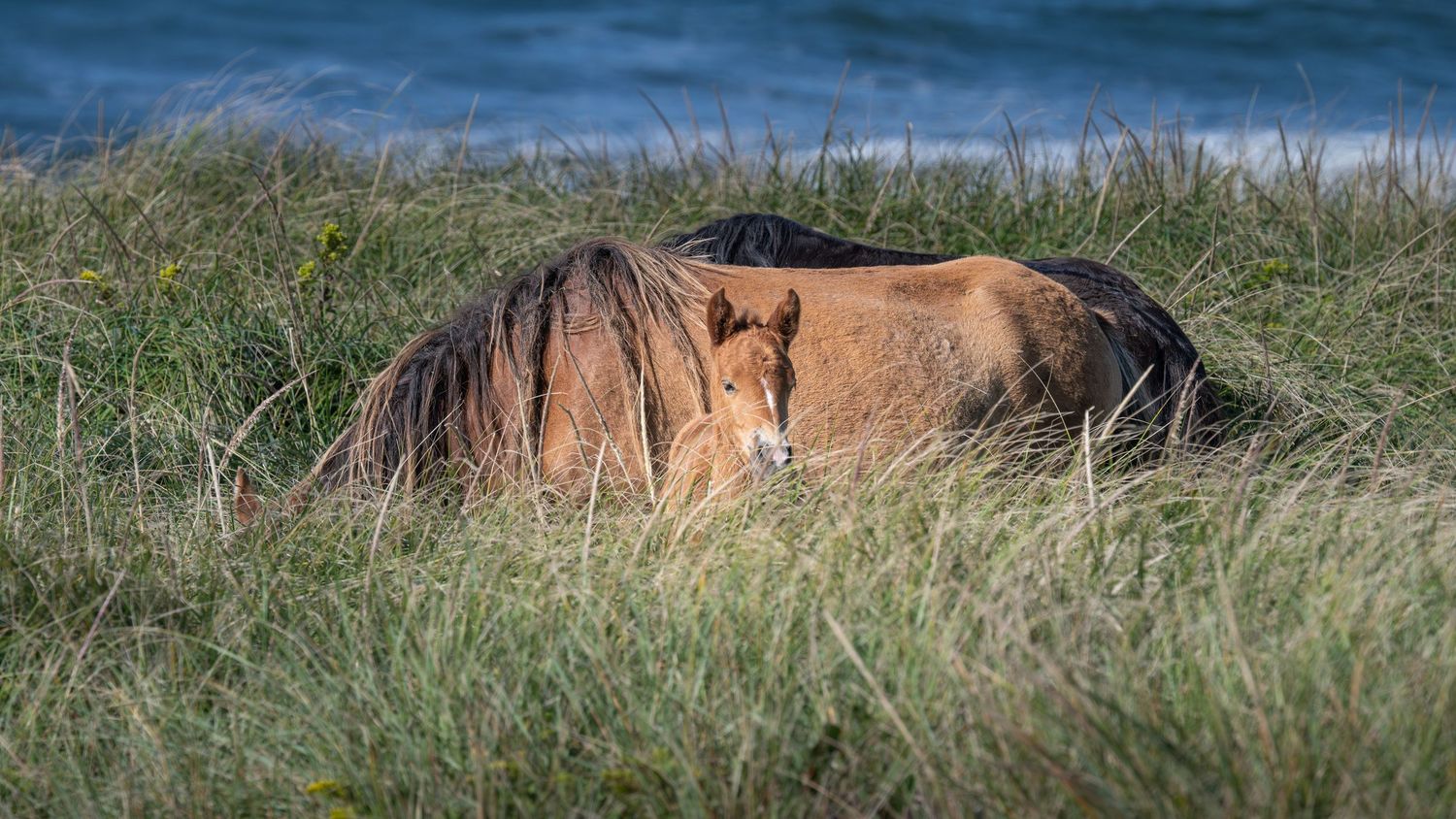
Sable Island is alive with wildlife despite its windswept, desolate look. Wild horses roam the dunes in small herds, a hardy population that’s become the island’s most iconic sight. In winter, the beaches transform into one of the world’s largest grey seal nurseries, with tens of thousands of pups born each year. Birdlife is equally striking—over 350 species have been recorded, including the rare Ipswich sparrow that nests only there. From whales offshore to migratory birds overhead, Sable Island is a wild sanctuary where nature feels both raw and magical.
- Be sure to download the iNaturalist.org app and join in with citizen science on the island.
- Check out the iNaturalist: Sable Island National Park Reserve Checklist
- Read about the university research in the Sable Island Horse Project
Looking for inspiration?
These photographers and film makers offer perspectives on Sable Island, from its natural inhabitants to the environmental challenges it faces. Each work provides a unique lens through which to appreciate the island's remote beauty and ecological significance.
Photography
Michelle Valberg - Wildlife Photography, Workshops & Fine Art
Michelle Valberg, C.M. is one of Canada’s most celebrated wildlife and nature photographers—a visual storyteller, Nikon Ambassador, and recipient of the Order of Canada whose career spans four decades and all seven continents. Wonderful teacher and the leader of my trip to Sable Island.
Roberto Dutesco – Wild Horses of Sable Island
Roberto Dutesco is renowned for his extensive work documenting the wild horses of Sable Island. His 25-year photographic journey culminated in the creation of the Wild Horses of Sable Island gallery in New York City. His images have been exhibited worldwide and are featured in a limited edition book available through his gallery.
Damian Lidgard – Lidgard Photography
Nova Scotia-based photographer Damian Lidgard offers expressive interpretations of nature and landscapes, with a particular focus on the wild horses of Sable Island. His work emphasizes a meditative approach to photography, capturing the essence of the island's wildlife and landscapes.
Sandy Sharkey – Sandy Sharkey Photography
Sandy Sharkey, a former radio announcer turned photographer, leads guided photography expeditions to Sable Island. Her trips offer opportunities to photograph the island's wild horses and seal pups, providing a unique experience for both photographers and nature enthusiasts.
Debra Garside – Debra Garside Photography & Art
Debra Garside is the only professional photographer granted overnight expedition access to Sable Island in all four seasons. Her extensive time on the island has resulted in a profound collection of images that capture the island's unique wildlife and landscapes.
Diane Williams – Sable Island Horses
Diane Williams' work focuses on the wild horses of Sable Island, capturing their stories and dynamics through photography. Her limited edition book, The Equine Spirits of Sable Island, combines photography and art to portray the essence of these wild horses.
Drew Doggett – Sable Island Series
Drew Doggett's black-and-white photography series on Sable Island explores the relationship between the wild horses and their environment. His work includes a film that offers a dynamic perspective of the island's unique ecosystem.
Video
Geographies of Solitude (2022)
Directed by Jacquelyn Mills, this award-winning documentary follows naturalist Zoe Lucas, who has lived on Sable Island for over 40 years. The film captures her daily routines of cataloging the island's biodiversity and addressing the environmental challenges posed by marine debris. Premiering at the Berlin International Film Festival, Geographies of Solitude has garnered over 35 international awards and is celebrated for its contemplative portrayal of solitude and environmental stewardship.
Chasing Wild Horses (2007)
This documentary chronicles photographer Roberto Dutesco's journey to Sable Island, where he has captured the wild horses that roam freely on the island. The film delves into his artistic process and the challenges of photographing these elusive creatures in their natural habitat. Dutesco's work has been featured in exhibitions worldwide, highlighting the unique beauty of the Sable Island horses.
Sable Island (1956)
Produced by the National Film Board of Canada, this short documentary offers a glimpse into the island's secluded wildlife. It showcases the wild horses, seals, and birds that inhabit the island, providing a snapshot of its unique ecosystem. The film serves as an early visual record of Sable Island's natural beauty.
The Magic and Mystery of Sable Island (2016)
This 42-minute documentary provides an intimate look at Sable Island's remote environment, focusing on its shipwrecks, wild horses, and the challenges posed by its isolation. The film offers a personal perspective on the allure and dangers of the island.
Land and Sea: Sable Island (2013)
Episode airing on CBC. Sable Island is soon to be one of Canada's newest national parks. But what is the balance between giving more people access to the iconic island while protecting its future?
Nature of Things. Equus: Sable Island (2018)
Fast forward to the 28min mark to see Niobe Thompson's investigation of horses on Canada’s Sable Island, Thompson visits the only truly wild horses on Earth, now evolving in unexpected ways in their completely human-free world.